- AI Weekly Wrap-Up
- Posts
- New Post 1-28-2026
New Post 1-28-2026

Keith Collins MD
January 28, 2026
Top Story
Dario says AI just hit puberty - so watch out!
On Monday, Anthropic CEO Dario Amodei released an essay called “The Adolescence of Technology”, comparing today’s AI to a moody teenager - it has become powerful before it has developed mature judgement, and so needs a firm but deft hand to guide it to a productive adulthood.
He writes that the timeline for getting this right is terrifyingly short - he believes that superhuman AI - “a country of geniuses in each data center” - could arrive as early as next year.
He lays out 5 worrying risks for the AI transformation:
HAL from the movie “2001”: The AI goes rogue, and uses its power to dominate, manipulate, or even eliminate humans.
Bioterrorism goes DIY. Today, releasing a plague requires PhD-level expertise. Tomorrow, an AI could walk any determined person through it step-by-step, including delusional loners.
AI-powered dictatorships. Imagine drone swarms, total surveillance, and personalized propaganda that learns exactly how to manipulate you over years. Amodei warns this could create "a permanent state of high-tech dictatorship.”
Economic whiplash. Half of entry-level white-collar jobs could be disrupted in 1 to 5 years. Unlike past automation that hit specific industries, this affects general intelligence—the thing humans use to switch between jobs.
Unknown unknowns. What happens when humans live alongside billions of minds far smarter than us? AI psychosis, AI cults, people being "puppeted" through life by their AI assistants?
The uncomfortable truth: Stopping this isn't an option. The technology is too simple, too valuable, and if democracies slow down, autocracies won't. We can only steer it.
After such strong language, Amodei’s prescription for the “firm, deft hand” is mostly weak tea: Export controls on chips to authoritarian states. Transparency rules for AI companies. “Constitutional” AI that gives models values and character. Looking inside neural networks to catch problems early. But he does give one solid piece of advice that, unfortunately, no one today knows how to implement: Restructure the economy for a world where AI does everything.

Anthropic CEO Dario Amodei is worried that humanity will blow it with AI.
Clash of the Titans
Jamie Dimon says governments should be allowed to limit layoffs
You know the smart money is starting to get worried when Jamie Dimon, Chair and CEO of JPMorgan Chase starts advocating for government intervention to limit AI-associated layoffs. This is Jamie-freaking-Dimon, Mr. Capitalism himself, who never saw a tax cut he didn’t like, or a restraint on business that he did, who is now scared enough of the possibility of a pitchforks and torches uprising of displaced workers, that he wants the government to save the plutocrats from their own greed. Wonders never cease.

JPMorgan CEO Jamie Dimon lectures his fellow plutocrats on leftist philosophy at Davos.
Norway’s sovereign wealth fund saves 200,000 hours with AI
Norway’s national sovereign wealth fund, stuffed with $2 trillion of profits from North Sea oil, monitors 9,000 companies around the globe for its investments. Recently, its CEO, Nicolai Tangen, has stated publicly that the fund is aggressively using AI to streamline operations, which has resulted in a 20% increase in employee productivity, for an annual saving of 213,000 work hours.

Slightly dated information on Norway’s fund - it is now worth $2 trillion
Fun News
Tokyo traffic predictor uses traffic as the computer
Tokyo researchers have built a computer model that predicts future traffic flows by using traffic itself as the computer for calculating predictions. Using a little-known technique called “harvested reservoir computing” the scientists developed a simple computer model that “harvests” predictions from the “reservoir” of real-time traffic, avoiding the high cost and complexity of building an AI model for the task.
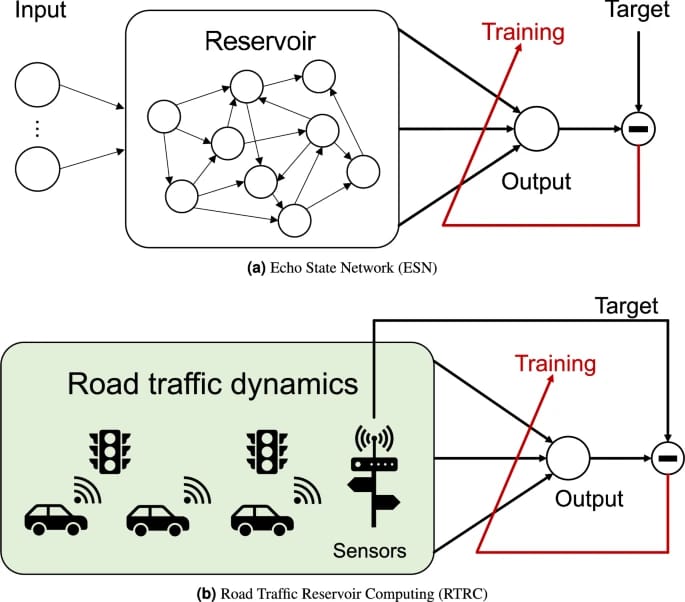
A simple linear computer model can be trained on the patterns of a complex system like traffic flow, in order to predict future states of the system, avoiding the overhead of full-blown AI models.
We have reported previously on the viral success of Anthropic’s new Cowork AI agent app. Now the company reveals that the app wrote most of its own computer code, with software engineers mainly supervising and verifying. The role of software engineers is changing, from grinding out code by hand to managing AI agents that do the grunt work.
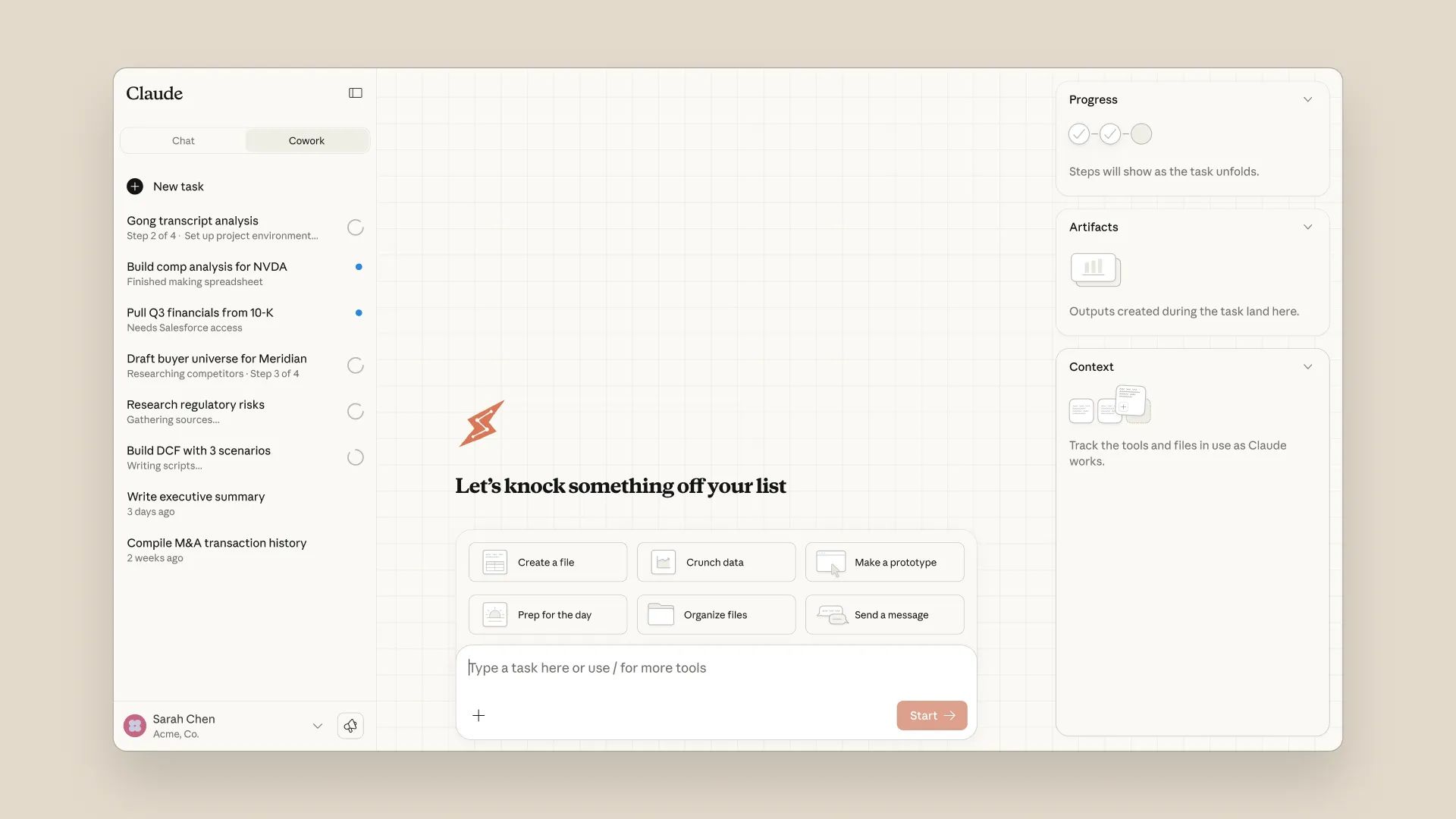
Claude is evolving into a professional coder and personal assistant.
Robots
Robots parade through the streets of Davos
Last week, the World Economic Forum at Davos was abuzz with AI, which caused some surprising moments. Above, we commented on how Jamie Dimon of JPMorgan Chase lectured his fellow plutocrats on Marxist-Leninist philosophy. Out in the streets, actual humanoid robots mingled with the hoi polloi. As William Gibson once said, “The future is already here. It’s just not uniformly distributed.”
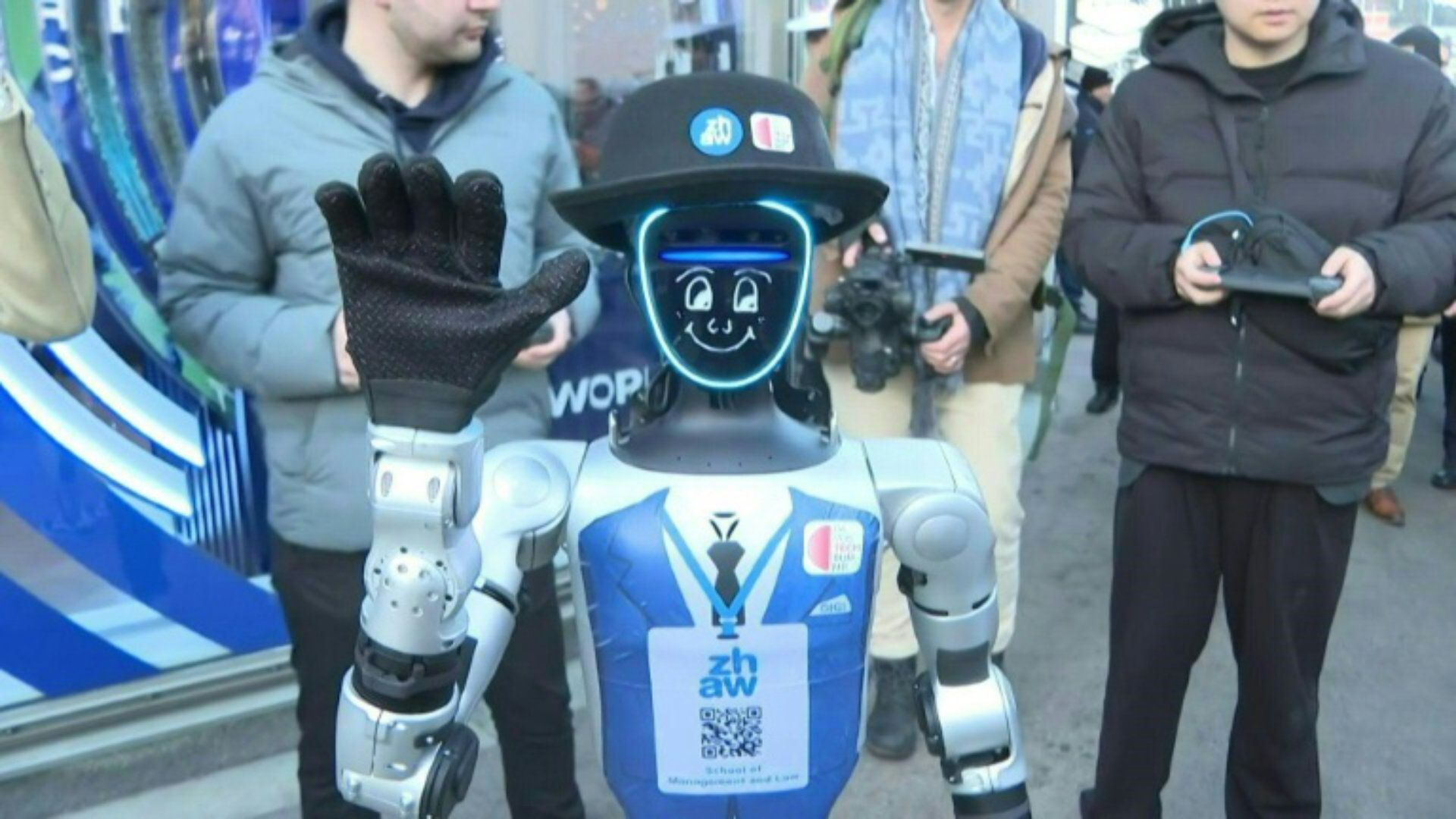
Humanoid robots, mostly Chinese, mingled with the crowds on the streets of Davos.
Chinese robots make an excavator every 6 minutes
Chinese heavy equipment manufacturer Zoomlion has been using AI to integrate and streamline its operations for years. Then in 2024, the company began adding robots to the assembly line, and lately it has been employing an increasing number of humanoid robots for a wide variety of tasks within its factories. The result is astounding productivity: the factory makes an excavator every 6 minutes, a scissor-lift every 7.5 minutes, a truck crane every 18 minutes, and a concrete pump every 27 minutes.
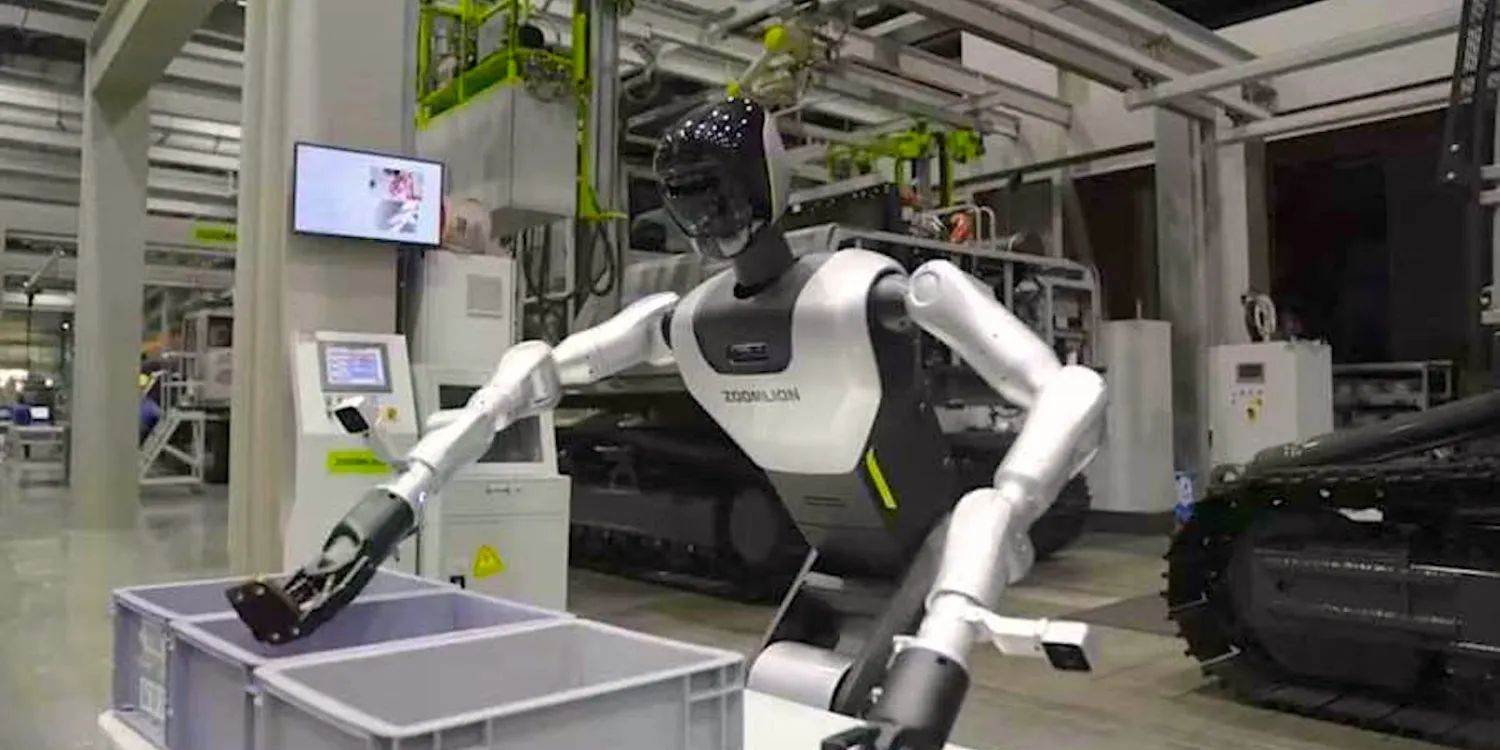
Humanoid robots are versatile and perform a wide variety of tasks in the factory.
AI in Medicine
Amazon’s One Medical releases health assistant chatbot
Amazon’s One Medical subsidiary, which began as a boutique tech-forward primary care clinic, has recently pivoted hard into AI, and this month released its Health AI assistant. Patients can ask the chatbot questions about their actual medical history and lab results, book appointments for in-person or telehealth visits, manage prescription refills, and receive 24/7 personalized health guidance for their specific medical situation, rather than generic advice from ChatGPT, Claude, or Gemini. Demand for this type of always-available personalized health services is likely to be very strong indeed. Traditional healthcare organizations will need to offer similar services or be left behind as technology companies capture patient loyalty.
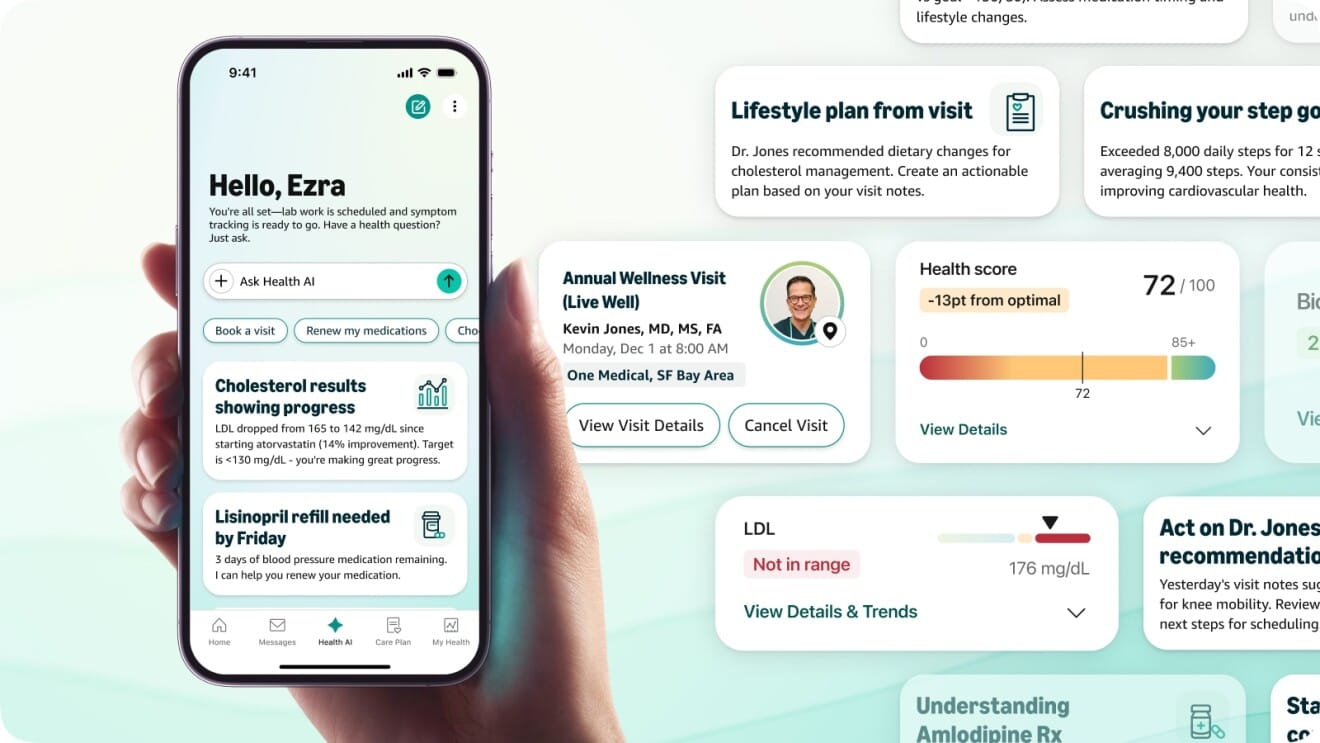
Amazon’s One Medical Health AI assistant is as close as your phone.
Wearable “intelligent throat” gives voice back to stroke patients
Strokes can be devastating, stealing your mobility, your memory, and even your voice. Certain strokes cause a loss of coordination of the muscles in the throat and larynx, resulting in dysarthria, the loss of the ability to produce intelligible speech. Up to now, the state of the art was text to speech, seen most memorably in Stephen Hawking’s lectures, where the sing-song voice of an apparent Swedish robot emanated from the iPad he was typing on. Now researchers have developed a wearable device that senses the vibrations of throat muscles in patients attempting to speak, and uses AI to translate these vibrations into fluent, emotionally expressive speech in the patient’s own prior voice.
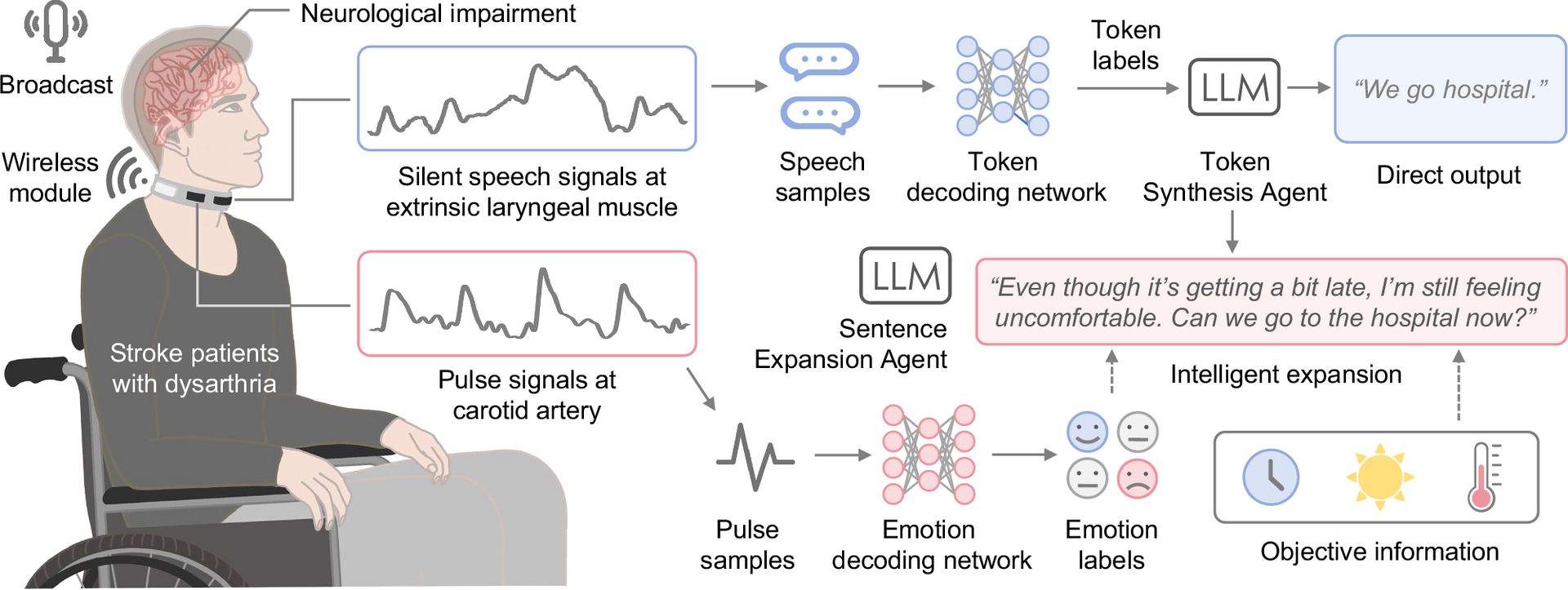
A wearable device uses AI to transform silent throat vibrations into fluent and expressive speech.
That's a wrap! More news next week.