- AI Weekly Wrap-Up
- Posts
- New Post 2/4/2026
New Post 2/4/2026

Keith Collins MD
February 04, 2026
Top Story
Elon pivots from EVs to Space, AI, and Robots
Tesla sales are faltering, and the company is facing a possibly existential threat from cheaper, better Chinese EVs. Faced with possible financial ruin if Tesla’s stock tanks, Elon is pivoting - hard.
First, he is phasing out the luxury vehicles, the iconic S sedan and the “falcon wing” X SUV. This frees up factory space for Cybercab robotaxis, and possibly for more Optimus humanoid robots.
Second, he has merged SpaceX, his rocketship company, with xAI, his AI company, in a deal that values the combined entity at $1.25 trillion (just shy of the current - insanely overpriced -$1.56 trillion for Tesla.) The “rationale” for this merger (so far as there is one, other than Elon’s desperate need to distance himself from the floundering Tesla before the stock totally tanks) is - wait for it - AI data centers in space! Yes, Elon claims that putting massive data centers up in space will solve all of the pesky problems of land, and power, and water that data centers on Earth have. The fact that putting data centers up in space will necessarily be orders of magnitude more expensive than building earth-bound ones is a mere detail not yet fully explained in his grand vision.
SpaceX is preparing to go public in an IPO later this year, planning to raise $30-$50 billion, at a valuation of the company of $1.5 trillion, which would make it the largest IPO in history. Elon will likely end up with approximately 40% ownership of the public company, which combined with his holdings in Tesla (until the stock tanks) bids fair to make him the world’s first trillionaire.

Image credit: Dreamstime
Clash of the Titans
Google makes Chrome an AI-powered browser with Gemini
Google’s Chrome owns over 70% of the browser market. That dominance has been threatened by AI startups who have tried their hand at crafting an AI-native browser. Now Google has updated Chrome with AI features powered by its state-of-the-art Gemini model. Chrome’s new look includes:
A persistent side panel (instead of the current, annoying little floating text window) where you can interact with the AI model, which will know what’s in all your tabs;
Auto-Browsing, which means that the AI tab can search the web, navigate websites, fill in forms, and complete multi-step tasks such as booking flights or filing expenses;
Nano Banana, which allows you to edit images directly in the browser using text prompts; and soon,
“Personal Intelligence” for those that opt in, that allows Gemini to remember your preferences and past interactions, to streamline and tailor its help for you.
Google clearly seems to be on the right track here, and it may well be able to extend its browser dominance into the AI era.
Google is putting AI in the driver’s seat of your browser.
China OKs purchase of Nvidia’s second-best chips
Joe Biden first banned exports of America’s top AI chips to China, to try to keep an edge for the US in the race for artificial intelligence. Trump first extended the ban, then opened the door a bit. China retaliated by pouring resources into domestic chipmakers like Huawei to try to develop chips rivaling those of the US, and by banning non-Chinese chips in government-supported work (which in China is a lot of the economy.)
Now China is loosening their ban, and allowing three of its largest tech companies - ByteDance, Alibaba, and Tencent - to purchase hundreds of thousands of Nvidia’s last-generation H200 chips, recently superseded by the newer Blackwell B200 and B300 chips. Scads of other Chinese companies are lined up to get their own dispensations from the government, which is doling them out on a case-by-case basis.
The lure of Nvidia’s chips has caused the Chinese government to relent on its ban.
Fun News
French startup releases Twin, the AI agent for everyone
A team of ex-Google AI scientists in France have released an AI automation tool called Twin, and it has taken the internet by storm. Twin is positioning itself as “the AI Agent for the rest of us”, comparing itself to the viral hit Clawdbot (now OpenClaw) which is a security nightmare and fit only for highly skilled software developers, or people with more courage than sense.
Twin reportedly enables “one-person startups”, as well as AI assistants for more mundane businesses like plumbing contractors.
It features:
No-Code Automation: users describe a task in plain English and Twin builds the workflows in real time.
Long-Term Memory: Twin’s agents have a persistent memory that maintains context across multiple tasks over time, and is shared between agents.
“Self-Healing” Workflows: The Twin system automatically detects automation errors, and fixes them in real time.
Enterprise-Grade Security: Login information to external tools or sites are stored in encrypted “vaults”, which keeps passwords safe. The much-discussed OpenClaw is literally a security nightmare. Which, to be fair, the community around it knows, and in the way of open source projects, will likely be fixed - just not yet.
So, yeah, for now Twin is “the AI Agent for the rest of us”, and a glimpse of the future that is apparently working today.

Daniel George PhD, CEO and Co-founder of TwinMind, the startup that has created Twin.
AI plots Mars rover track
Mars is so far away from Earth that it takes light (or in this case, radio waves) anywhere from 3 minutes to 22 minutes to travel one way between the two planets. This makes long-distance direct operation by humans in real time impractical - by the time you see the cliff, the rover has already fallen over it. Until now, teams of humans will labor for days or even weeks to plan a Mars rover excursion of only 100 meters.
This December, Anthropic’s AI model Claude, using the same satellite imagery data used by human teams, plotted 2 consecutive 200-meter excursions for the Mars rover Perseverance. The process took half the time it would have taken the human team, and both tracks were successfully completed as planned.
This opens the possibility of AI-automated route plotting, freeing up whole teams of human scientists and engineers from the drudgery of hand crafting routes on a planet millions of miles away.
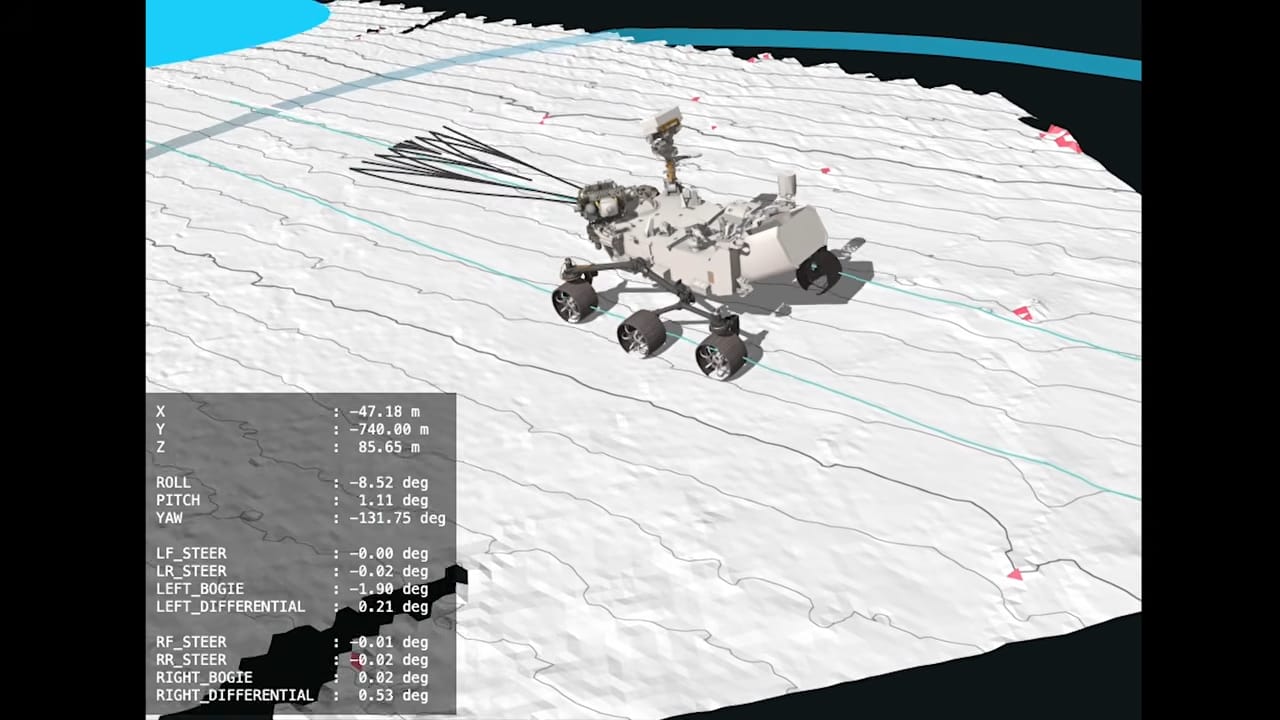
Simulation of the Mars Rover on an excursion. (Source: NASA)
Robots
Waymo seeks $16 Billion, valuing the company at $110 Billion
With Tesla’s Cybercab and Amazon’s Zoox robotaxi efforts nipping at its heels, driverless taxi leader Waymo is garnering an additional $16 billion of capital so it can put the pedal to the metal in its buildout of its US footprint. Already operational in 6 major US cities, with over 20 million trips completed, Waymo is now planning to roll out to over 20 additional cities in 2026.
The new investment values the company at a staggering $100 billion. For comparison, all of General Motors is valued at just $80 billion, and it makes 6 millions vehicles a year. Waymo has just under 2,000.
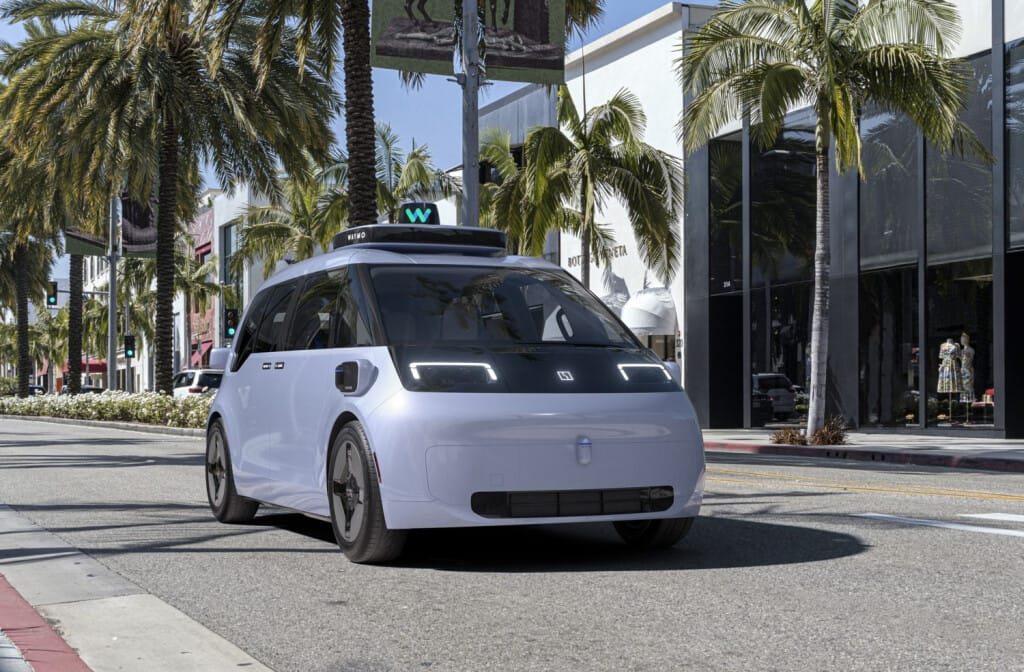
If you live in a major US city, you are likely to see a Waymo driverless cab soon.
DeWalt’s autonomous drilling robots build AI data centers 90% faster.
Readers will be aware that there is a historic boom in building AI data centers. Currently the demand for them seems endless, causing every part of the construction chain to come in for scrutiny on how to build them faster and cheaper. Toolmaker DeWalt has released autonomous drilling robots that automate the drilling of the thousands of holes needed for placement of the racks that will hold the servers. These drilling robots can be deployed in teams of 4 or more, work 24/7, drill with 99.9% precision, and can finish an entire data center in a week, a job that takes a human team 9 weeks. Intelligent robots are building thinking machines, faster, cheaper, better. To quote sci-fi writer William Gibson: The future is already here - it’s just not yet evenly distributed.
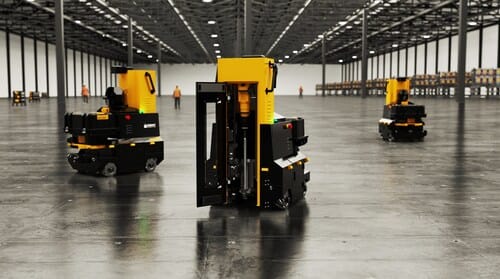
DeWalt’s autonomous drilling robots work in teams to prepare data centers for server placement.
AI in Medicine
Swedish study shows AI catches more cancer, cuts workload by 44%
In a massive Swedish randomized controlled trial (RCT) recently published in The Lancet, researchers confirmed that AI-supported mammography improves outcomes while reducing radiologist workload.
The MASAI study followed 105,000 women, half of whom received traditional “double-read” mammography, in which 2 different radiologists read the image, and only the agreed findings are finalized, while disagreements are studied further. The other half of the cohort had their mammograms read by a single radiologist, with an AI system in effect acting as the second reader.
The AI-assisted physicians improved sensitivity of cancer detection to 80.5%, significantly higher than the 73.8% of the traditional human double-reading. Specificity in the AI-assisted group was a rock-solid 98.5%, meaning no increase in false positives, despite higher sensitivity. Because there was only a single human read needed in the AI-assisted group, overall workload for the radiologists was slashed by 44%.
Here we have a rare win-win-win: better for the patients, better for the physicians, and better for the system of care.
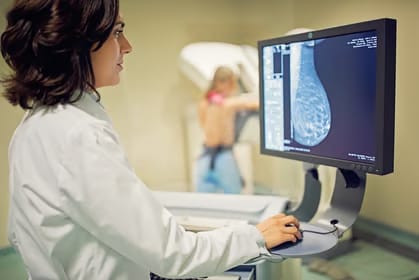
AI assisted mammography may soon become the standard of care.
Healthcare is adopting AI at breakneck speed - but it’s piecemeal
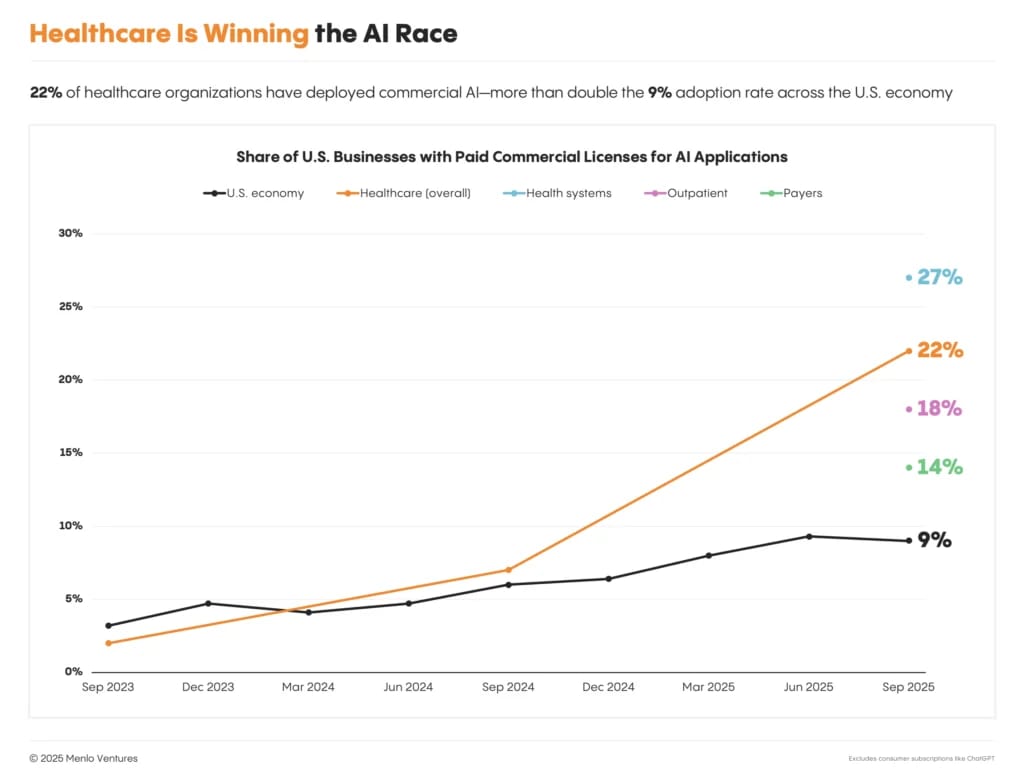
Big Tech and Wall Street are generally leaders in adopting new technology, but currently healthcare is the fastest-growing sector for AI integration. Health care organizations are adopting these tools faster than either Tech or Wall Street, and at 2.2 times the rate of adoption in the broader economy. While sectors like finance and telecom had a head start due to lower regulatory hurdles, healthcare has hit a massive "acceleration phase," with spending nearly tripling to $1.4 billion in 2025 alone. This surge is fueled by high-impact "quick wins," such as ambient AI scribes that tackle the industry's burnout-inducing documentation crisis, and a record-shattering 223 new FDA-approved AI medical devices.
Despite this rapid adoption, a significant gap remains between "using AI sometimes" and "being an AI-native organization." While some 80% of health care organizations have integrated AI into specific clinical or administrative workflows (such as radiology imaging or AI scribes), only about a third have fully embraced it. Concerns over data privacy and the complexity of legacy systems mean that while healthcare is currently winning the race for individual tool adoption, the finish line for true organization-wide integration is still some distance away.
That's a wrap! More news next week.