- AI Weekly Wrap-Up
- Posts
- New post 3-18-2026
New post 3-18-2026

Keith Collins MD
March 18, 2026
Top Story
Nvidia CEO on the future of AI
On Monday, Nvidia CEO Jensen Huang swaggered onto the stage of GTC, the company’s annual developer conference nicknamed the “Super Bowl of AI”, and laid out his vision of our AI future. Tl;dr: You think AI is big now? It’s going to get much, much bigger. The highlights:
Demand for AI computing has grown by 1,000,000-fold over the past 2 years, and will continue to grow explosively as AI models get ever more capable of doing real work.
AI chip usage will shift from training models (which Nvidia chips dominate with an 80% market share) to running models to do useful work, called “inference”, which is currently up for grabs. Nvidia’s recent acquisition of the Groq inference chipmaker for $20 billion shows how serious the company is about competing for the inference chip market.
AI in 2026 will be focused on models that can reason, agents that can do useful work, and robots that can work in the physical world, not just the digital sphere.
AI is a “five-layer cake,” with each layer based on the one below. At bottom is Energy, which is vital but currently scarce. Next is Chips, which need to get more energy-efficient as they get more powerful. Then there is Infrastructure, the physical data centers where computing happens, with associated storage, cooling, and data transmission devices. Fourth is Models, the actual AI software developed by OpenAI, Anthropic and Google. Finally, there are Applications, the top layer where actual economic value is created, such as drug discovery platforms, self-driving cars and trucks, and commercial robots.
As Jensen strutted about the stage in his signature leather jacket, giving off “Steve Jobs, but as an Asian Dad” energy, the mood in the 30,000+ attendees was palpable: they, and we, are now part of the AI Generation, present at the creation of a seemingly unstoppable force that will transform our world for good and ill, and very, very soon.
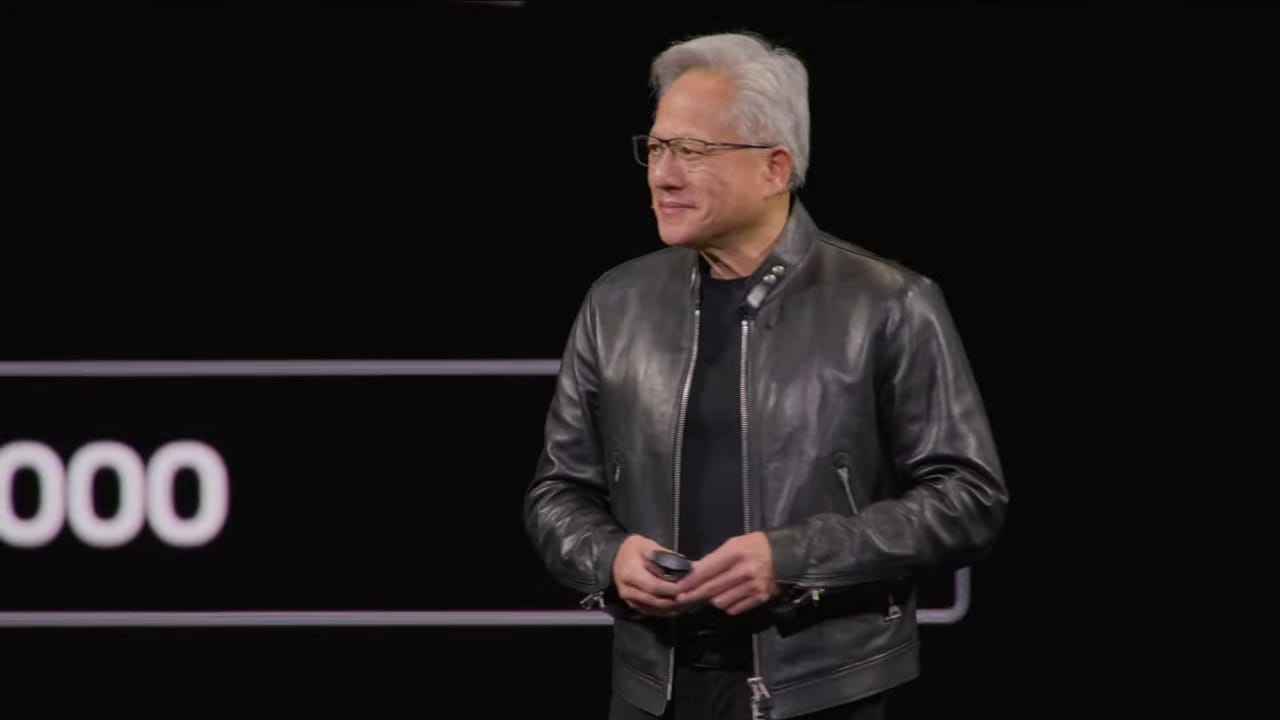
Nvidia CEO Jensen Huang onstage in his signature leather jacket, laying out the future of AI.
Clash of the Titans
Meta plans 20% workforce cuts to offset AI investments
Meta/Facebook keeps making AI news, but lately it is never for the right reasons. Once the darling of the open source AI enthusiasts, Meta has been stumbling for over a year. A year ago, it halted development of Llama 4, the planned upgrade to its widely praised Llama 3 AI model. Rumors are that it wasn’t good enough to compete with the Big Three modelmakers (OpenAI, Anthropic, and Google.) Meta CEO Zuckerberg then went on a wild poaching spree for AI talent, enticing top AI scientists away from the Big Three with signing bonuses as high as $100 million. That culminated in Zuckerberg buying a whole company, Scale AI, for $14 billion, just to hire its CEO, 28-year-old Alexandr Wang, who was put in charge of all of Meta’s AI development. Predictably, reporting to a 28-year-old did not sit well with the former head of Meta’s AI development, the legendary, Turing Award-winning, Yann LeCun, who is rumored to have tweed jackets older than Wang. LeCun has since left Meta to found his own company, raising $1 billion in a seed round, the largest seed investment in European history, valuing the new company at $3.5 billion.
Having given a king’s ransom to lots of new employees, and facing hundreds of billions in infrastructure investments to build data centers, Zuckerberg has now decided, according to Reuters, to save money by cutting loose up to 20% of the existing employees of Meta, around 16,000 individuals. Meta stock jumped 3% on the news - Wall Street loves layoffs - so now Zuckerberg’s hand is forced. If he backs off the layoffs now, it is likely that Meta stock will tank.
Until Zuckerberg can figure out how to make news for the right reasons - like building capable models or figuring out how to deploy useful AI agents - Meta’s AI efforts will remain under a cloud.

Meta CEO Mark Zuckerberg celebrating a 3% rise in his stock price on news of massive layoffs.
Chinese going bananas for OpenClaw
Enthusiasm has continued to grow around the world for OpenClaw, the open source AI Agent framework that people are using to automate their lives and their businesses, ever since it was invented in November as a weekend project by a bored software developer. Nowhere is this interest more fervent than in China, where software engineers and nontechnical folks alike are adopting the app in droves. The app has become a popular sensation, with local meet-and-learn events popping up in multiple cities, drawing hundreds, and sometimes thousands of the curious as well as throngs of early adopters. Local governments, eager to encourage any trend that increases AI literacy, a national goal included in China’s newest 5-Year Plan, are offering support for some gatherings, and even more support for entrepreneurs that want to try to start a business using OpenClaw. Since OpenClaw is easy to use, but as a DIY open source project, technically difficult to set up, many of these early businesses are aimed at helping with installation and support of OpenClaw itself.
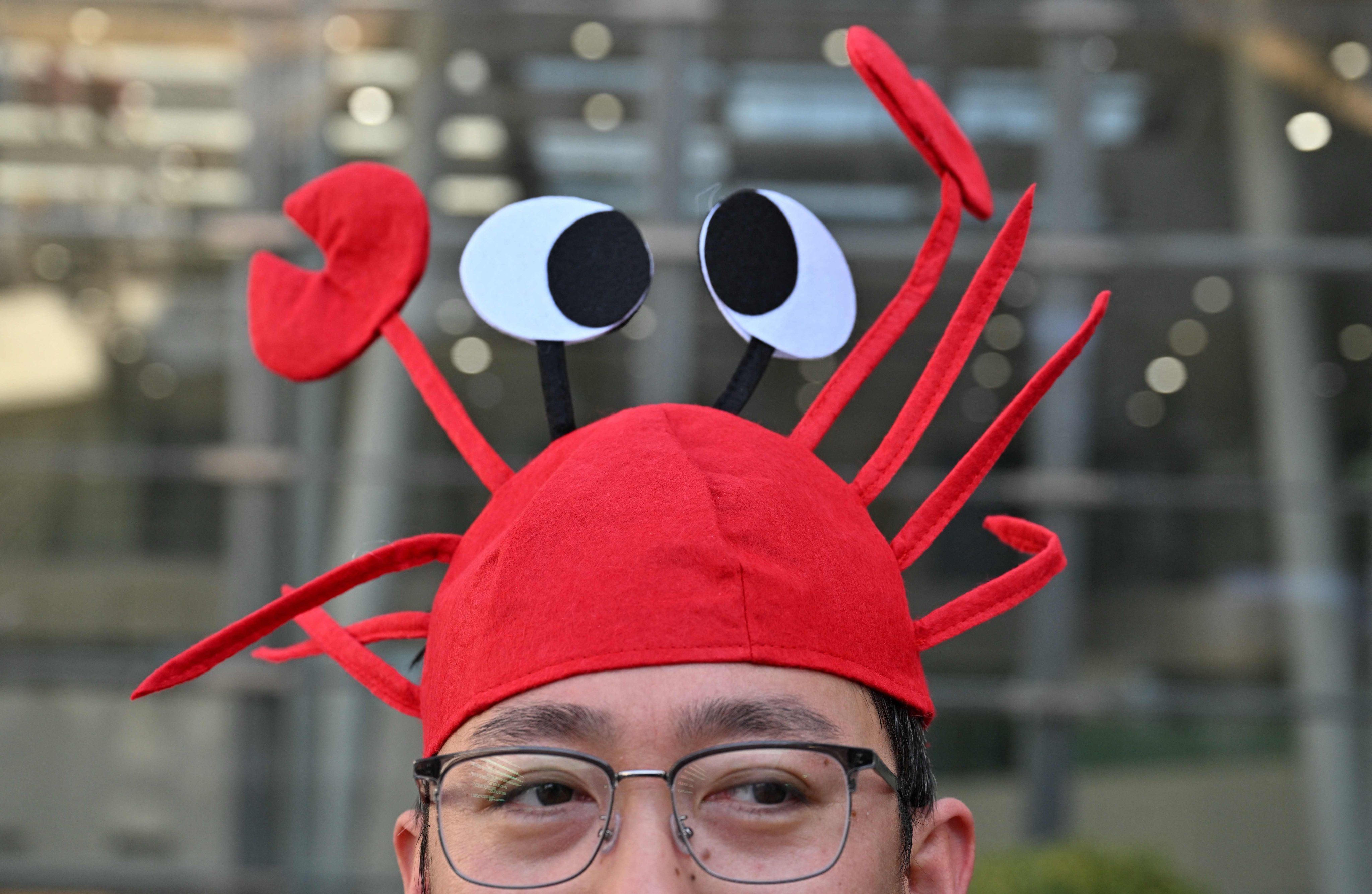
An attendee at an OpenClaw learning event in China dresses for success.
Fun News
Aussie tech entrepreneur uses AI to invent cancer treatment for his dog
Paul Conyngham, a tech entrepreneur from Sydney, adopted his dog Rosie from an animal shelter in 2019. Sadly, Rosie was diagnosed with cancer in 2024. Conyngham spared no expense to try to save his beloved canine, but existing treatments of chemotherapy and surgery merely slowed, but did not halt the progression of Rosie’s disease. Desperate, Conyngham began using ChatGPT as a resource to find out about innovative cancer treatments. This led to learning about new approaches that harnessed the patient’s own immune system to battle the cancer. He reached out to gene scientists at a local university to sequence the DNA of Rosie’s tumor, and used his data analysis skills to process the genetic data to come up with potential targets for a vaccine. The university scientists synthesized an mRNA vaccine to Conyngham’s specifications, and after receiving the required ethical approvals for experimentation on animals, injected the vaccine into the dog. The response was dramatic - a 50% reduction in the size of Rosie’s largest tumor, and a visible increase in the animal’s wellbeing. This story points out how the dramatic increase in the availability of AI tools is enabling a new level of experimentation and innovation by nonspecialists in a variety of fields.

Tech entrepreneur Conyngham used AI to invent a personalized vaccine to fight his dog’s cancer.
AI “brain-fry” is real
It has become well known that AI software assistants have increased the productivity of software engineers dramatically, allowing them to produce much more code, more quickly. In the process, the job of software engineers has become to direct, supervise, and manage AI agents rather than to hand code software themselves. We are now finding that managing agents doesn’t just free up software engineers from hand coding, it imposes its own distinct cognitive load. Hand coding requires an intense focus, sometimes for hours at a time, on a complex but singular task. With AI agents, the software engineer is typically setting off multiple agents at once to work in parallel, and then checking the output of each agent as it finishes. This requires multitasking, with constant shifts in focus onto separate tasks. This sort of task-juggling can be exhausting - ask any Mom. The mental fatigue is being called “AI brain-fry”, and it just may be the future of work.

Throbbing temples? You, too, may have AI brain fry.
Robots
He’s b-a-a-c-k! Uber founder Travis K launches Atoms with a manifesto
For years, the downfall of Travis Kalanick, founding CEO of Uber, has been cited as a cautionary tale. The brash, hard-charging, hard-partying Kalanick was ousted from the company he founded and made a household name, because he moved a little too fast, broke a few too many things, and in particular, touched a few too many female employees without consent.
Kalanick effectively dropped out of sight after his ouster from Uber, but he wasn’t idle. He started a robotic food preparation company named CloudKitchens. He avoided the limelight so obsessively that employees of the company were not allowed to list their employer on their LinkedIn profiles. He has been sighted in recent months on the periphery of deals to acquire autonomous driving startups.
Last week, Kalanick burst back onto the stage - with a vengeance. He announced a new robotics company named Atoms, which will be focused on manufacturing robotic systems for food preparation, mining, and autonomous vehicles. He also included a 1,700 word manifesto detailing his grandiloquent vision of the future of robotics (“…a Golden Age..”), and , of course, himself: (“..this is my calling…“), and, chillingly, (“I NEVER LEFT”). Therapy never made a dent in that man-boy.

Kalanick: “I’m not back, I NEVER LEFT!”
Chinese researchers design “centaur” robot for carrying heavy loads
Robotics companies have been experimenting with a variety of forms in recent years: quadruped, biped, humanoid, dog-like, and wheeled. Now Chinese researchers have built a prototype of a new type of hybrid robot - a two-legged platform that hitches onto the back of the human operator, in effect making a 4-legged combination designed for carrying heavy loads. The human focuses on steering and balance, the robotic platform focuses on load bearing.
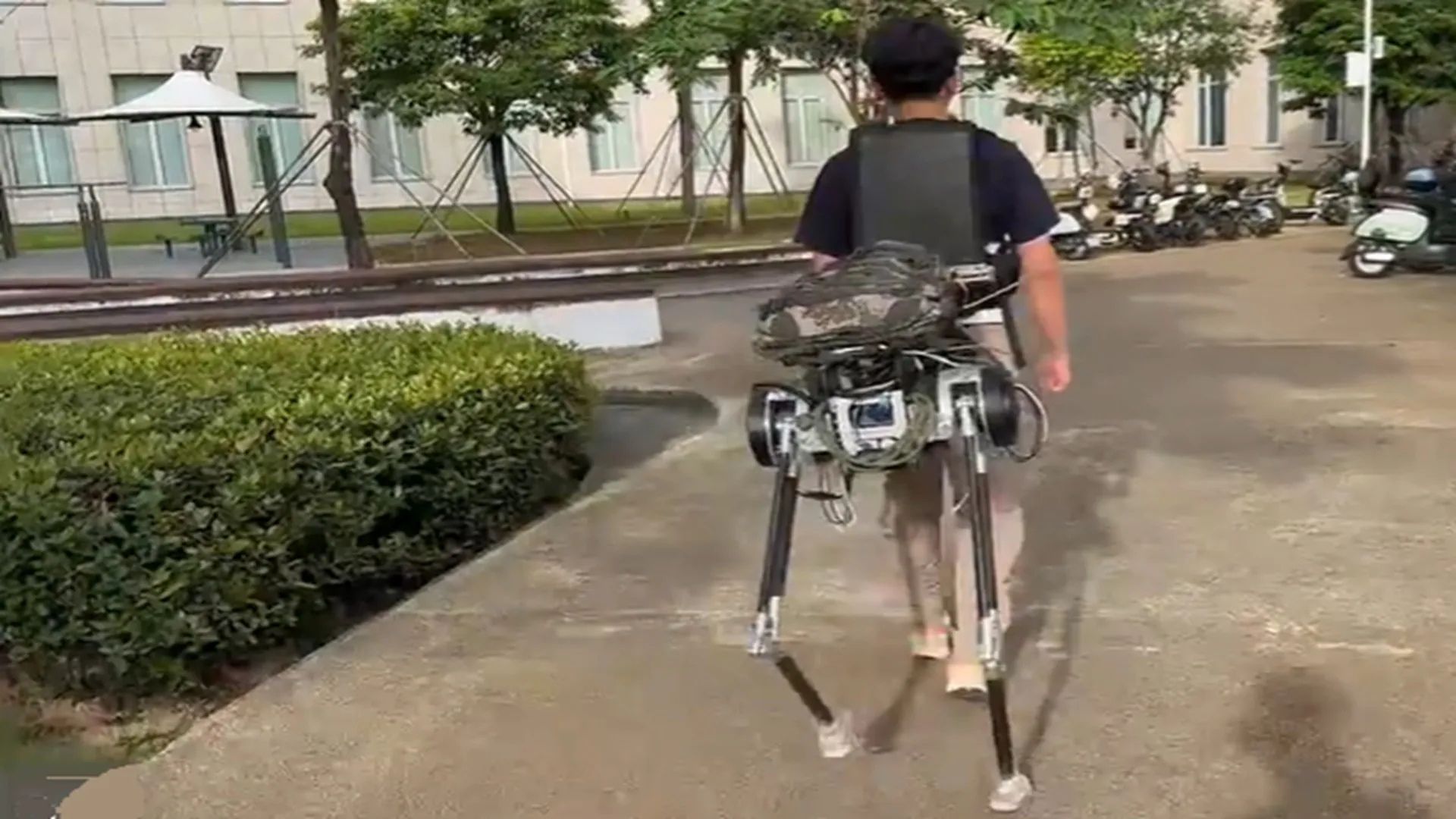
New robot prototype hitches onto the user’s back, creating a “centaur” for carrying heavy loads.
AI in Medicine
AI chatbot boosts HIV PrEP uptake in large real-world study
A large retrospective cohort study found that an AI chatbot designed for HIV PrEP (pre-exposure prophylaxis) information support in AIDS clinics significantly increased PrEP initiation, follow-up attendance, and appointment adherence for users of the chatbot compared with nonusers. This indicates that health information chatbots may have a positive impact on care, even in challenging populations. (PrEP is a care protocol in which individuals at risk of contracting HIV due to episodic unprotected sexual contact with casual acquaintances take daily anti-retroviral medications. This dramatically decreases transmission of HIV.)

AI chatbots can improve patient engagement and health outcomes.
AI therapy chatbot boosts mental health outcomes
UK-based Limbic, an AI startup focused on mental health, has released a paper in Nature that details the results of a double-blind, randomized controlled trial of the effectiveness of specially-tuned AI chatbots as adjunct support for psychotherapy patients. The study found that the chatbot outperformed licensed human therapists in the delivery of Cognitive Behavioral Therapy.
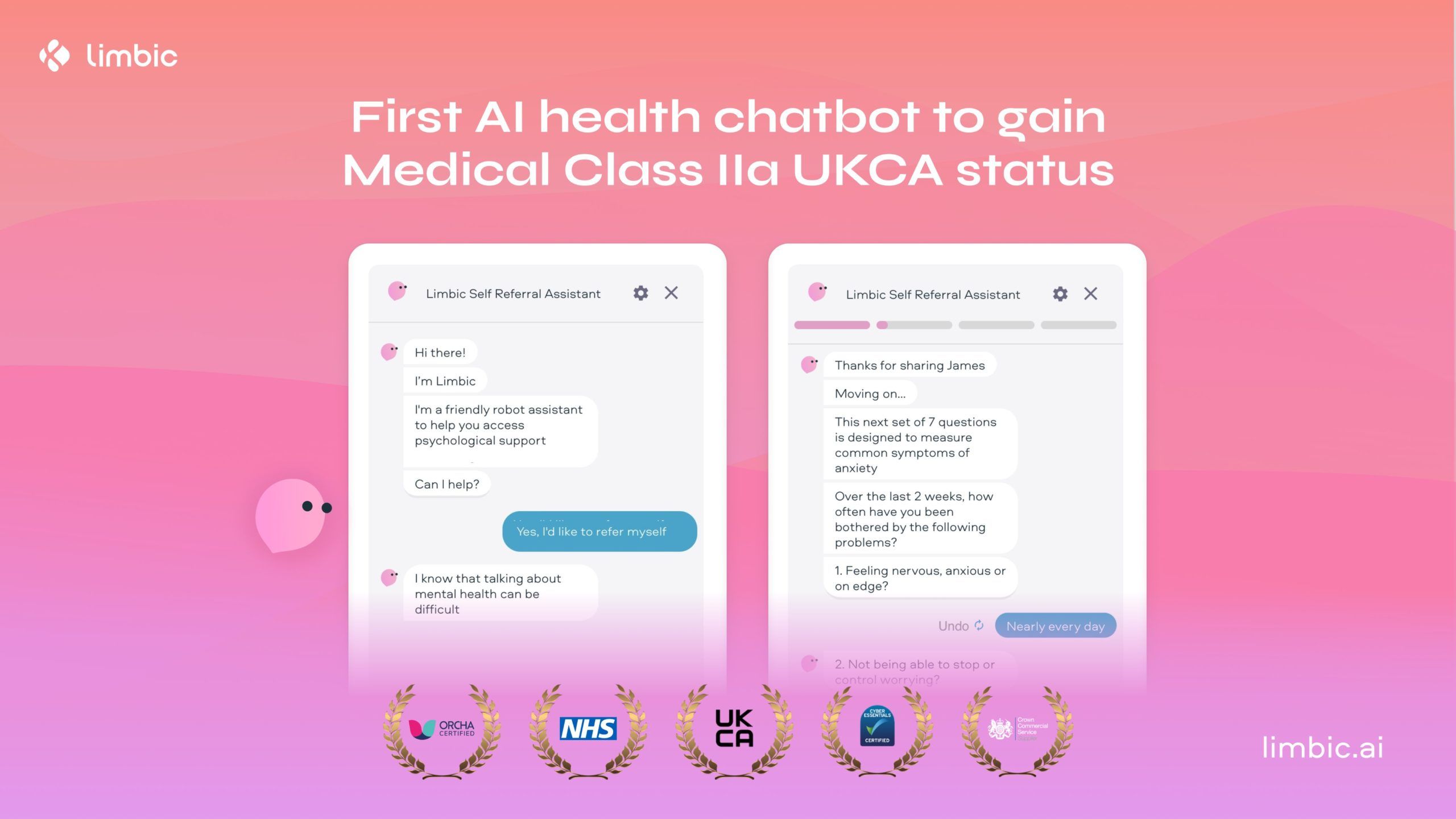
Limbic’s AI chatbot for psychotherapy has been licensed as a medical device in the UK.
That's a wrap! More news next week.